
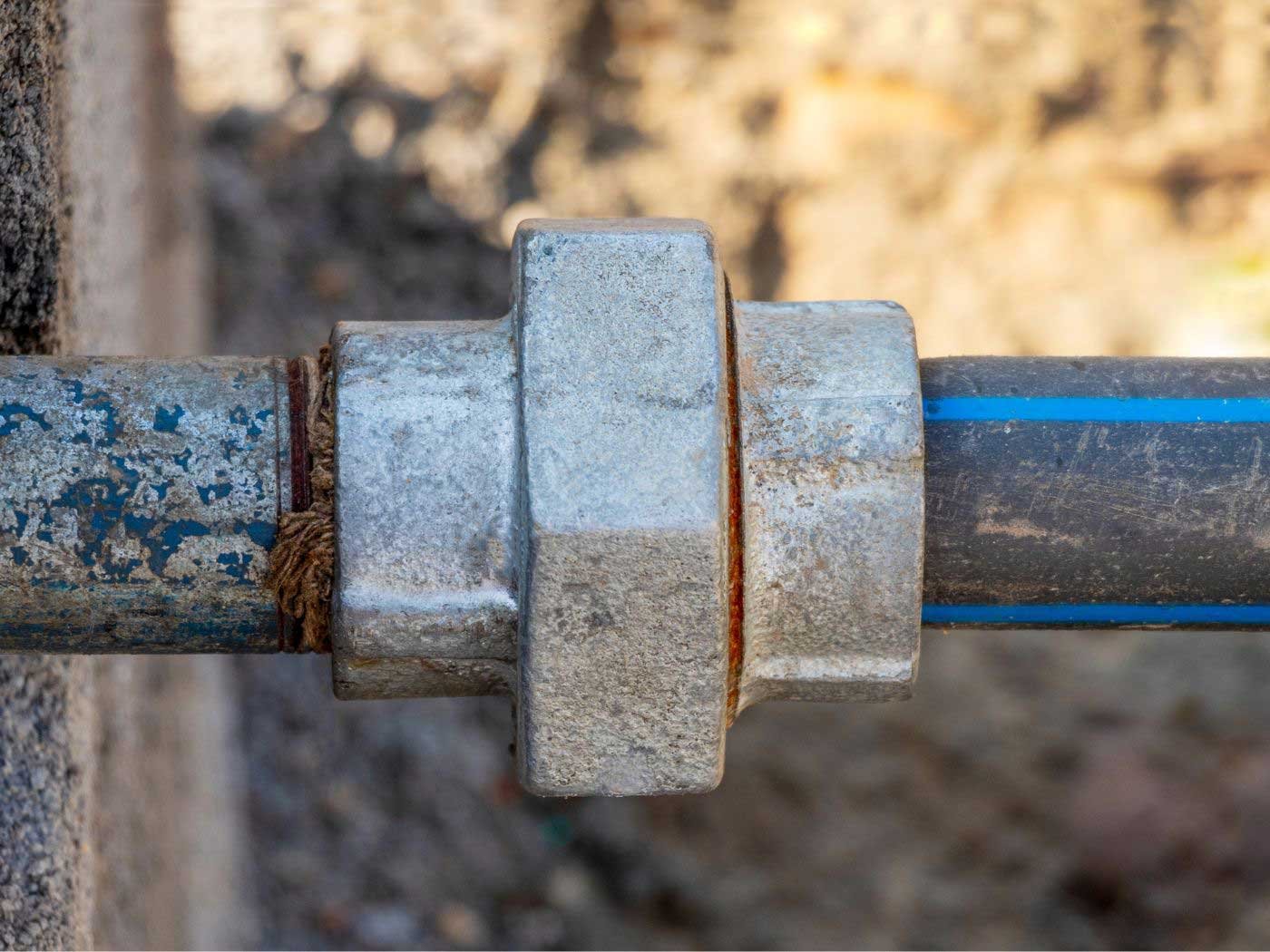
Can we Connect Ductile Iron Pipes to PVC Pipes?
Generally speaking, the answer is a solid yes. Many experts prefer connecting ductile iron to PVC for a better system function. In this way, the hybrid system becomes stronger, easier to maintain, more cost-efficient, and more versatile.
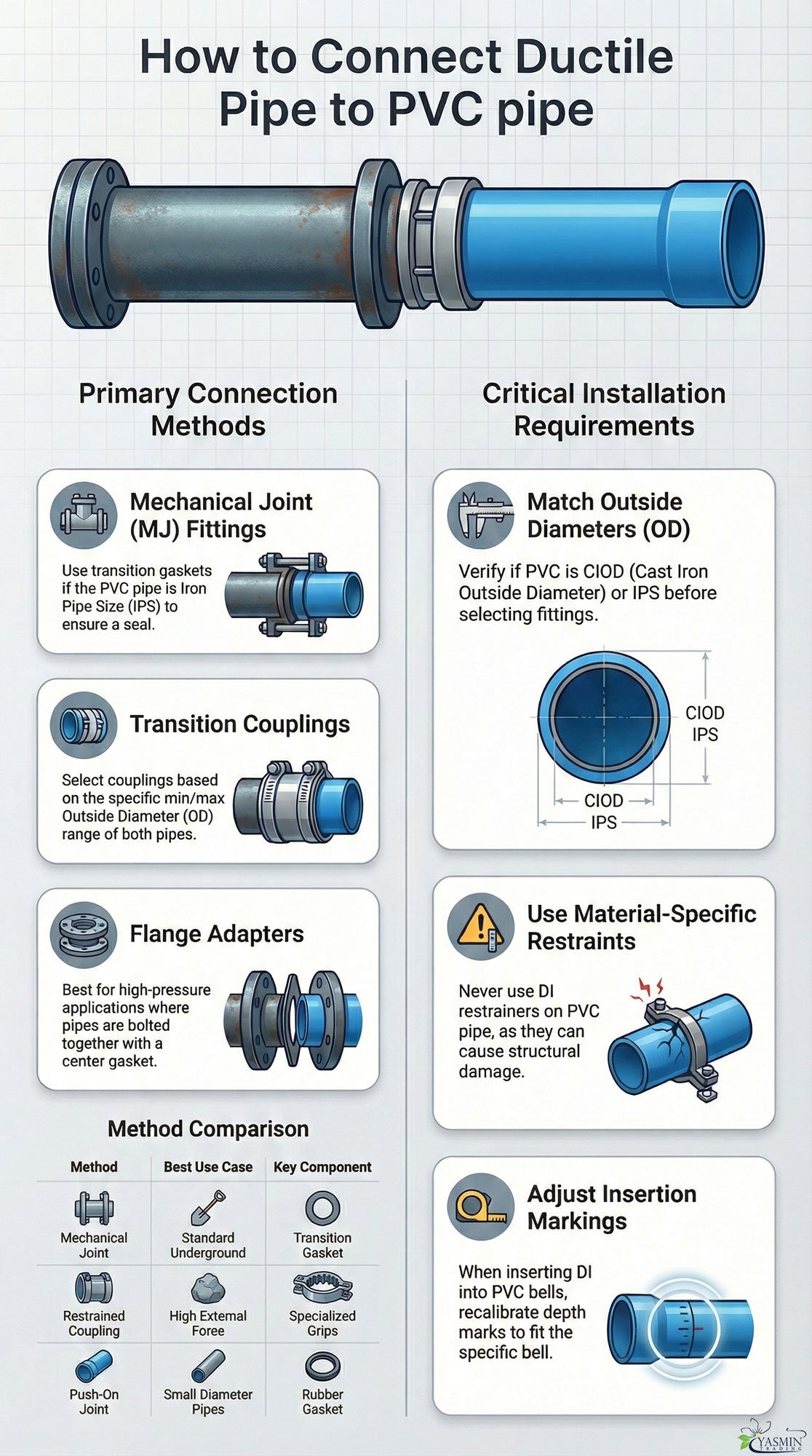
There are many different methods of connecting ductile iron pipes to PVC. It includes flanged connections, restrained couplings, mechanical joint adapters, push-on joints, and Transition Gaskets. You must consider factors such as long-term reliability, pressure resistance, and ease of installation to choose the most suitable option.
Keep reading to learn everything you demand!
How can we Connect Ductile Iron to PVC?
Experts prefer to join PVC pipes to ductile iron pipes for enhanced performance. Yet, PVC pipes with Cast Iron OD’s are commonly used to connect ductile iron pipes by mechanical joints.
According to JM Eagle, C900 PVC pipe can have a direct connection to pipe bells as well as ductile iron pipes that can also be joined to C900 PVC. This combination significantly improves the water distribution systems and offers many unique benefits.
Connecting ductile iron pipes to PVC allows engineers to take advantage of both materials by creating a combined and hybrid system. This system offers both features of ductile iron and PVC pipes, which is a considerable upgrade in different industries. There are many different methods to join these two popular components.
What Are the Benefits of Connecting Ductile Iron to PVC?
Both PVC and ductile iron pipes are widely used in water distribution systems due to their unique benefits. The compatibility of ductile iron and PVC is considerable. Although these two offer different properties and technical features, they can be connected as they are highly compatible. Here are a few benefits of connecting ductile iron to PVC.
Cost Efficiency
You can adjust ductile iron and PVC fitting options depending on your requirements. In this way, you save more money and achieve a highly efficient system without breaking the bank.
Easy Maintenance
When you connect ductile iron to PVC pipes, you actually retrofit the piping system. That’s how you can maintain or repair some specific areas of this system without needing to replace it entirely.
Combined Strengths
Once you combine ductile iron with PVC pipes, you can have a highly enhanced piping system. This hybrid piping system leverages the benefits of both materials. The new system is powerful, durable, corrosion-resistant, and easy to install.
Versatility
Transitioning from ductile iron to PVC is an opportunity to keep the system versatile. It allows engineers to use their creativity to solve the project problems.
You can make informed decisions when you understand the benefits of connecting ductile iron fittings to PVC ones.
What Are the Different Methods of Connecting Ductile Iron to PVC?
There are different methods to join ductile iron and PVC pipes together. Each method is used on specific occasions based on the project’s needs. You should have enough information about these approaches to choose the best one that meets your requirements.
Flanged Connections
One of the most popular methods is using flanges of ductile iron and PVC. These flanges get bolted together using a gasket in between. Flanges can be helpful when you are looking for a pipe connection method for high-pressure applications. They offer secure connections between ductile iron and PVC pipes for high-pressure distribution systems.
Restrained Couplings
When the piping system is prone to external forces or movements, you should improve it by connecting ductile iron to PVC. Referring to McWane Ductile, this junction can be done utilizing restrained couplings that can grip pipes securely. These couplings provide engineers with a reliable pipe connection even under high pressure.
Mechanical Joint Adapters
One of the most common methods to connect ductile iron pipes to PVC pipes is using mechanical joint adapters. These adaptors are made from a rubber gasket, gland and bolts. That’s why experts prefer this method of pipe connection when they require watertight sealing. Moreover, adaptors for ductile iron to PVC are one of the most reliable and smooth options due to their easy installation process.
Push-on Joints
If the pipe diameter is smaller than usual, you can consider push-on joints to create your ideal hybrid piping system. Push-on joints have a ductile iron spigot and a PVC bell that are attached to each other with a rubber gasket. That’s how this type of pipe connection method can offer a high level of sealing.
Transition Gasket
These components are specifically made to connect ductile iron pipes to PVC pipes. They can meet your specific project needs as they have a unique design to achieve this goal. They create a seal between two pipes to join them together in the easiest method possible.
How to Choose the Best Method to Connect Ductile Iron to PVC?
If you are confused about choosing the best piping connection method, continue reading. There are three important factors you need to keep in mind when determining the best way of connecting ductile iron to PVC.
Pressure Resistance
It’s essential to understand how much your ductile iron and PVC fittings are resistant to pressure. There are two important types of pressure to consider.
- Surge Pressure: It refers to transient pressure surges in the piping system. You should consider its potential to see if the connection method can handle it ideally.
- Operating Pressure: No matter which method you have chosen to connect ductile iron to PVC, it should handle the operating pressure. Operating pressure is the maximum amount of force on the distribution system.
Lifespan Duration
Each method of connecting ductile iron to PVC gas has its own impacts on the system lifespan. It’s necessary to check the long-term reliability when choosing a method.
- Maintenance Needs: Are the components replaceable after a long time? How hard is it to maintain them? Answering these questions helps you make a wise decision.
- Material Compatibility: The piping material compatibility should be reliable enough. In this way, you can ensure a safe connection between ductile iron and PVC pipes.
- Lifespan: The connection method you choose impacts the piping system lifespan. Try to make the ductile iron and PVC pipe last longer by making the right decision.
Installation Process
Before making your decision about the pipe connection method, you must consider the installation process. Some methods require high levels of expertise while the other ones can be done smoothly.
- Area Condition: When determining the ease of installation, you need to consider the system condition. Accessibility, available empty space, and environmental factors can affect your final choice.
- Pipe Diameter: You should take care of the size and diameter of pipes to choose the right connection component.
Successful Connection Between Ductile Iron and PVC Pipes
Connecting ductile iron pipes to PVC pipes requires some level of expertise and knowledge. You must seek expert guidance if you lack information and can’t make the most suitable decisions. Here at Yasmin Trading, we offer the highest quality Ductile Iron Pipe fittings in the UAE and the Middle East countries.
Our professionals provide you with quality components and helpful consultation. In this way, you can ensure a safe and amazing connection of ductile iron to PVC that enhances system performance. Visit our experts for more valuable services!
FAQs
1- Is it safe to connect ductile iron pipe to PVC pipe?
Yes. Engineers connect ductile iron to PVC in water and wastewater systems across the US and Middle East. When you select the correct adapter or coupling and match pressure class ratings, the joint performs as a reliable, watertight transition. Many utilities use this hybrid setup to extend existing ductile iron lines with PVC while maintaining system integrity.
2- What is the most common way to connect ductile iron to PVC?
Mechanical joint adapters are among the most common solutions. They use a rubber gasket, gland, and bolts to create a tight seal between different outside diameters. Contractors prefer this method because it installs with standard tools, provides strong sealing, and allows future disassembly for maintenance. Restrained couplings are also common where thrust forces or movement are concerns.
3- Can ductile iron and PVC handle the same pressure levels?
They work together when you match their pressure classes correctly. PVC pipes such as C900 are manufactured in specific pressure ratings, while ductile iron pipes follow defined pressure and thickness classes. You must verify operating pressure and surge pressure in your system and ensure the selected connection method meets or exceeds those values.
4- Do you need special fittings to connect ductile iron to PVC?
Yes. You should not connect them directly without a proper transition fitting. Mechanical joint adapters, restrained transition couplings, flanged adapters with gaskets, and transition gaskets are designed to accommodate differences in outside diameter and material behavior. Using the correct fitting prevents leakage and joint failure.
5- When should you use a restrained connection instead of a standard joint?
You should use restrained connections when the pipeline is exposed to thrust forces from bends, tees, or valves, when soil conditions are unstable, or when surge pressure is high. Restraint prevents pipe separation under load and improves long term system stability and safety.
References:
- https://www.mcwaneductile.com/blog/how-can-i-connect-other-materials-to-ductile-iron-pipe/
- https://www.dipra.org/ductile-iron-pipe-resources/faqs/connecting-di-pipe-to-pvc-pipe
- https://uni-bell.org/wp-content/uploads/2022/01/Technical-Note-Connecting-DIP-to-PVC-Uni-Bell-TN-3-18.pdf
- https://www.awwa.org/Store/Product-Details/productId/28016267


Leave a Reply